Shopping Bag
Popular Suggestions


Neuropathy Treatment
Neuropathy Treatment
Neuropathy refers to damage or dysfunction of the nerves that carry signals between the brain, spinal cord, and different parts of the body. It can cause symptoms such as numbness, tingling, burning sensations, weakness, and pain, often affecting the hands and feet.
Our Neuropathy Treatment services focus on identifying the underlying cause, relieving symptoms, slowing disease progression, and improving nerve function to help patients maintain a better quality of life.
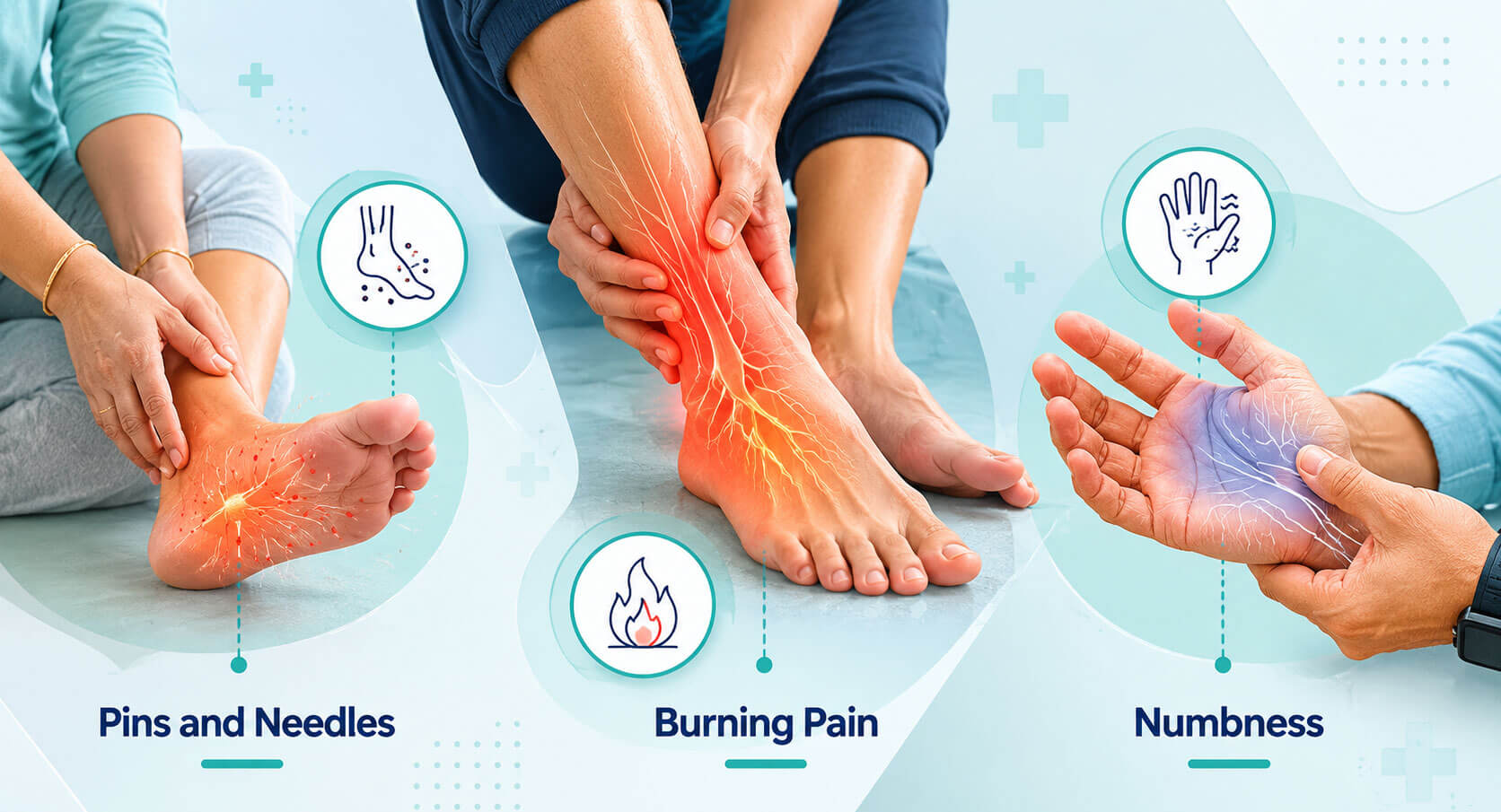
What is Neuropathy?
Neuropathy, also known as peripheral neuropathy, occurs when nerves outside the brain and spinal cord become damaged. Depending on the type and severity of nerve involvement, patients may experience sensory, motor, or autonomic symptoms that interfere with daily activities.
How Does Neuropathy Feel?
Symptoms can vary from mild discomfort to severe pain and mobility issues. Common complaints include:
 Tingling or "pins and needles" sensation
- Burning pain in the feet or hands
- Numbness or reduced sensation
- Sharp, stabbing pain
- Muscle weakness
- Difficulty walking or maintaining balance
- Increased sensitivity to touch
- Cramping or muscle twitching
Common Causes of Neuropathy
Neuropathy can develop due to a variety of medical conditions and lifestyle factors.
- Diabetes
- Vitamin deficiencies
- Thyroid disorders
- Alcohol abuse
- Autoimmune diseases
- Infections
- Nerve compression injuries
- Certain medications
- Kidney and liver disorders
Who Should Get Evaluated?
You should consider neurological evaluation if you experience:
- Persistent numbness in hands or feet
- Burning or shooting pain
- Unexplained weakness
- Frequent falls or balance problems
- Loss of coordination
- Symptoms that worsen over time
Our Approach to Neuropathy Treatment
Every patient is unique, and treatment depends on the underlying cause and severity of nerve damage.
- Detailed neurological examination
- Nerve conduction studies and EMG evaluation
- Identification of underlying causes
- Medication management
- Diabetic neuropathy care
- Pain management strategies
- Lifestyle and nutritional guidance
- Long-term follow-up and monitoring
Protecting Your Nerve Health
Managing underlying conditions and adopting healthy habits can help prevent nerve damage and reduce symptoms.
- Maintain healthy blood sugar levels
- Follow a balanced diet
- Exercise regularly
- Avoid excessive alcohol consumption
- Take prescribed medications regularly
- Schedule routine neurological check-ups
Frequently Asked Questions (FAQs)
Book a Neuropathy Consultation
If you are experiencing numbness, tingling, burning sensations, or unexplained nerve pain, early diagnosis can help prevent further nerve damage. Schedule a consultation today for expert neurological evaluation and personalized neuropathy treatment.