Shopping Bag
Popular Suggestions


Headache Treatment
Headache Treatment

Headaches are among the most common neurological complaints and can affect people of all ages. While occasional headaches are usually harmless, frequent or severe headaches may indicate an underlying medical condition that requires professional evaluation.
Our Headache Treatment services focus on identifying the root cause of headaches and providing personalized treatment plans to reduce pain, prevent recurrence, and improve overall quality of life.
What is a Headache?
A headache is pain or discomfort in the head, scalp, or neck region. Headaches can vary in intensity, duration, and frequency. They may occur occasionally or become chronic, affecting work, sleep, and daily activities.
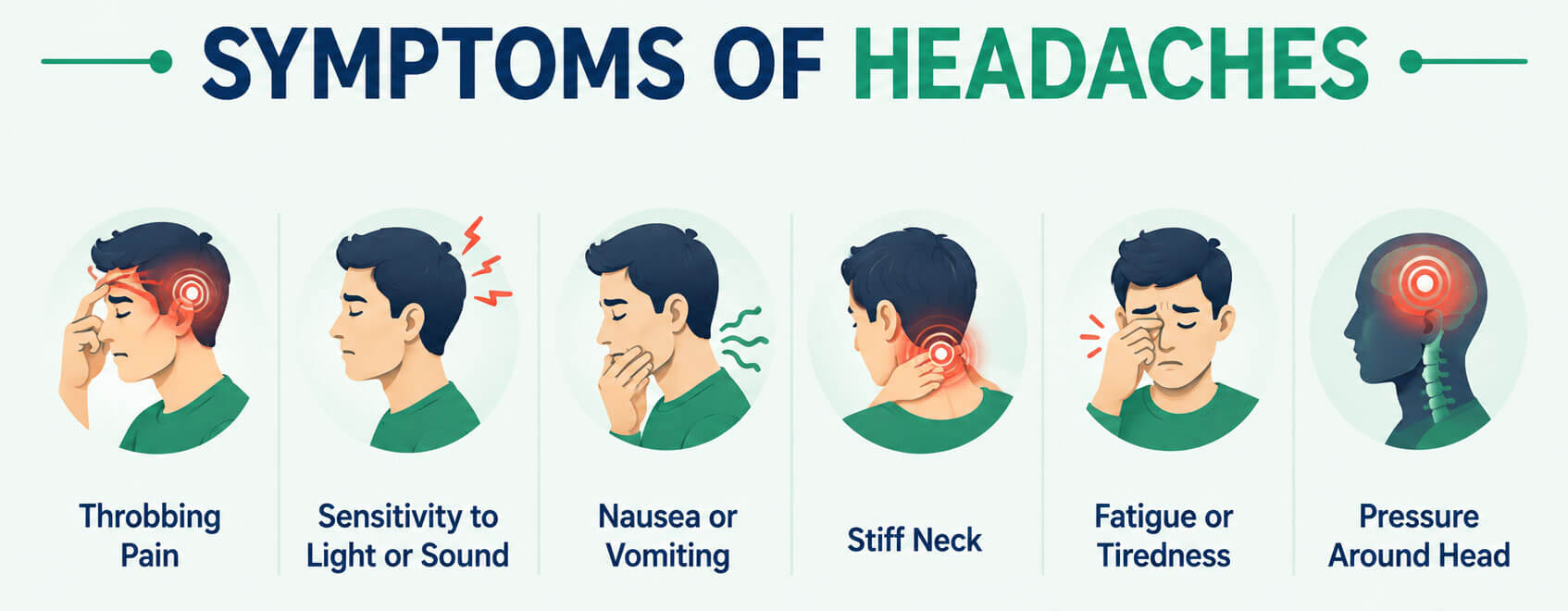
Common Symptoms of Headaches
Seek medical attention if you experience:
 Persistent or recurring headaches
- Throbbing or pulsating pain
- Pressure or tightness around the head
- Sensitivity to light or sound
- Nausea or vomiting
- Blurred vision
- Dizziness or lightheadedness
- Headaches that interfere with daily activities
Types of Headaches
Tension Headaches
The most common type of headache, often causing a dull, aching sensation and tightness around the forehead or scalp.
Migraine Headaches
Characterized by severe throbbing pain, often accompanied by nausea, vomiting, and sensitivity to light or sound.
Cluster Headaches
Intense headaches that occur in groups or cycles, usually affecting one side of the head and around the eye.
Secondary Headaches
Headaches caused by underlying medical conditions such as infections, sinus problems, head injuries, or neurological disorders.
Causes and Risk Factors
Several factors can contribute to headaches, including:
- Stress and anxiety
- Lack of sleep
- Dehydration
- Eye strain
- Poor posture
- Hormonal changes
- High blood pressure
- Certain foods and beverages
- Neurological conditions
Our Headache Treatment Services
We provide comprehensive headache evaluation and management, including:
- Detailed neurological examination
- Headache diagnosis and classification
- Migraine management
- Medication therapy
- Lifestyle and trigger assessment
- Preventive treatment planning
- Imaging review when required
- Long-term headache monitoring
- Personalized treatment recommendations
Managing Headaches Effectively
Proper headache management involves identifying triggers, maintaining healthy lifestyle habits, managing stress, staying hydrated, and following prescribed treatments. Early intervention can significantly reduce headache frequency and severity.
Why Choose Us?
- Expert neurological care
- Accurate diagnosis of headache disorders
- Personalized treatment plans
- Comprehensive migraine management
- Focus on long-term relief
- Patient-centered approach
- Advanced diagnostic evaluation
- Ongoing monitoring and support
Frequently Asked Questions (FAQs)
Book a Headache Consultation
If you experience frequent headaches, migraines, or persistent head pain, schedule a consultation today. Early diagnosis and expert treatment can help you find lasting relief and improve your quality of life.