Shopping Bag
Popular Suggestions


EEG & EMG Services
EEG & EMG Services
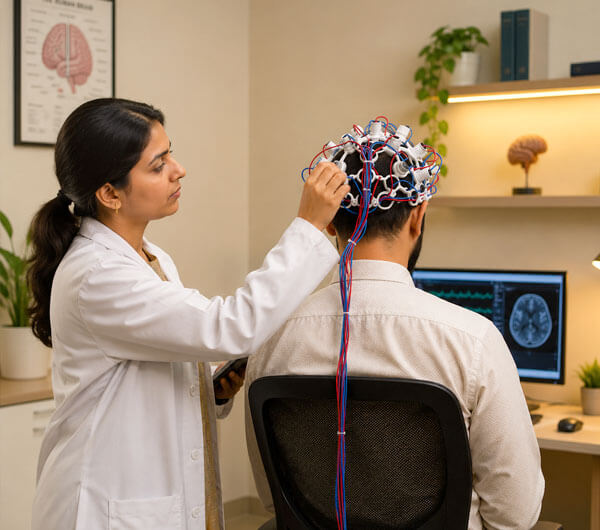
Accurate diagnosis is the foundation of effective neurological treatment. EEG (Electroencephalogram) and EMG (Electromyography) are advanced diagnostic tests that help evaluate the functioning of the brain, nerves, and muscles.
Our EEG & EMG services provide valuable insights into neurological conditions, helping identify the cause of symptoms such as seizures, weakness, numbness, muscle disorders, and nerve-related problems.
What is an EEG?
An Electroencephalogram (EEG) is a non-invasive test that records the electrical activity of the brain. Small sensors are placed on the scalp to detect brain wave patterns and identify abnormalities that may be associated with neurological disorders.
When is an EEG Recommended?
 Epilepsy and seizure disorders
- Unexplained loss of consciousness
- Fainting episodes
- Sleep disorders
- Memory disturbances
- Brain function assessment
What is an EMG?
Electromyography (EMG) is a diagnostic procedure used to evaluate the health of muscles and the nerves that control them. The test measures electrical activity within muscles and helps identify nerve damage, muscle disorders, and neuromuscular conditions.
When is an EMG Recommended?
- Muscle weakness
- Numbness and tingling
- Neuropathy
- Muscle cramps
- Nerve injuries
- Carpal Tunnel Syndrome
- Neuromuscular disorders
Why Are EEG and EMG Important?
Many neurological symptoms can have multiple underlying causes. EEG and EMG testing help provide accurate information about brain activity, nerve function, and muscle health, allowing for precise diagnosis and targeted treatment.
- Early detection of neurological disorders
- Accurate diagnosis of nerve and muscle conditions
- Better treatment planning
- Monitoring disease progression
- Evaluation of treatment effectiveness
Conditions Diagnosed with EEG & EMG
These tests play an important role in diagnosing various neurological conditions, including:
- Epilepsy
- Peripheral Neuropathy
- Carpal Tunnel Syndrome
- Myopathy
- Motor Neuron Disease
- Radiculopathy
- Nerve Compression Disorders
- Neuromuscular Junction Disorders
What to Expect During the Test?
EEG Procedure
The test is painless and usually takes 30–60 minutes. Electrodes are placed on the scalp to record brain activity while the patient rests or performs simple tasks.
EMG Procedure
The test involves evaluating nerve and muscle activity using specialized equipment. Mild discomfort may be experienced during certain parts of the procedure, but it is generally well tolerated.
Why Choose Our EEG & EMG Services?
- Accurate neurological testing
- Modern diagnostic equipment
- Expert interpretation of results
- Comprehensive neurological evaluation
- Personalized patient care
- Timely diagnosis and reporting
Frequently Asked Questions (FAQs)
Schedule Your EEG or EMG Evaluation
If you are experiencing seizures, muscle weakness, numbness, tingling sensations, or other neurological symptoms, an EEG or EMG may help identify the underlying cause. Schedule a consultation today for expert neurological evaluation and advanced diagnostic testing.