Shopping Bag
Popular Suggestions


Migraine Clinic
Migraine Clinic

Migraines are more than just headaches. They are a neurological condition that can affect your daily routine, work performance, sleep, and overall quality of life. Migraine attacks often recur and may be accompanied by symptoms such as nausea, sensitivity to light, and visual disturbances.
At our Migraine Clinic, we provide comprehensive evaluation and personalized treatment plans to help patients reduce migraine frequency, manage symptoms effectively, and regain control of their lives.
Why Do Migraines Happen?
Migraines occur due to complex changes in brain activity that affect nerves, blood vessels, and brain chemicals. While the exact cause varies from person to person, migraines are often influenced by genetic, hormonal, environmental, and lifestyle factors.
Signs You May Be Suffering from Migraines
Migraine symptoms can differ from ordinary headaches and may include:
 Severe throbbing or pulsating headache
- Pain on one side of the head
- Nausea and vomiting
- Sensitivity to light
- Sensitivity to sound
- Blurred vision
- Dizziness or vertigo
- Visual disturbances (Aura)
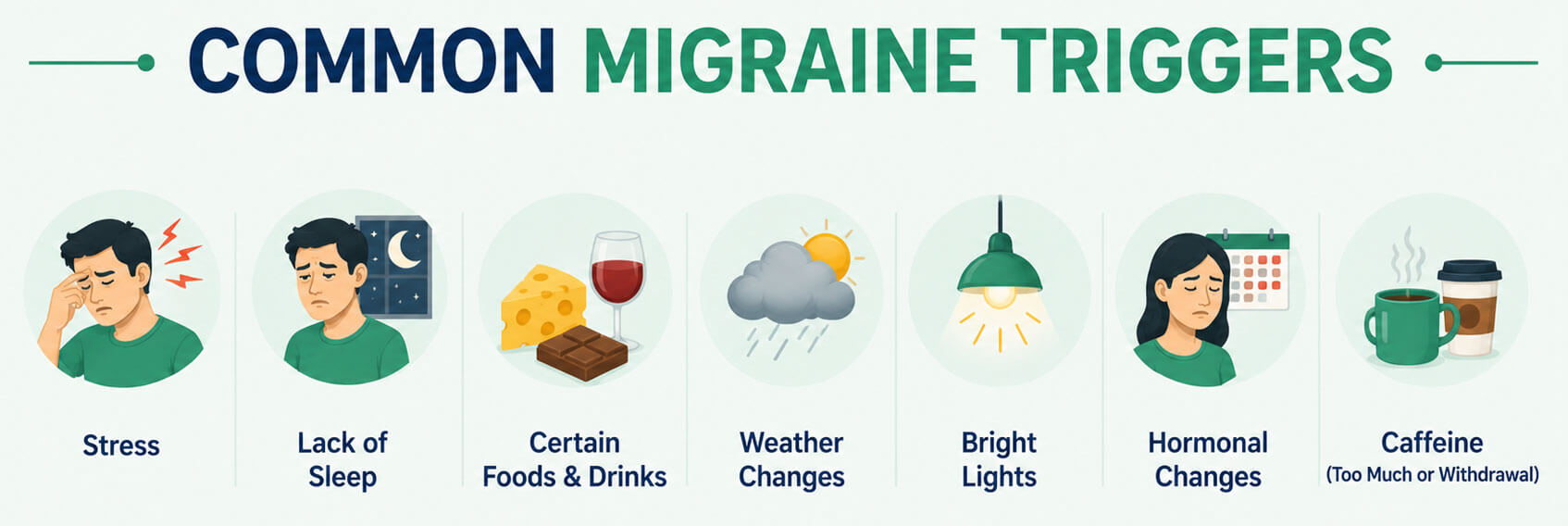
Common Migraine Triggers
Identifying migraine triggers is essential for effective long-term management. Common triggers include:
- Emotional stress
- Lack of sleep
- Skipping meals
- Hormonal fluctuations
- Excessive screen time
- Strong smells
- Weather changes
- Certain foods and beverages
- Dehydration
When Should You See a Neurologist?
You should seek specialist care if you experience:
- More than 4 headache days per month
- Frequent use of pain medications
- Headaches affecting work or daily activities
- Sudden changes in headache patterns
- Visual disturbances before headaches
- Severe headaches that disrupt sleep
How We Help Migraine Patients
Our goal is not just temporary relief but long-term migraine control through a personalized treatment approach.
- Detailed migraine assessment
- Neurological evaluation
- Identification of migraine triggers
- Acute migraine treatment
- Preventive migraine therapy
- Medication optimization
- Lifestyle modification counseling
- Long-term monitoring and follow-up
Lifestyle Tips for Migraine Prevention
Simple lifestyle changes can significantly reduce migraine attacks:
- Maintain a regular sleep schedule
- Stay hydrated throughout the day
- Avoid skipping meals
- Exercise regularly
- Manage stress effectively
- Limit excessive caffeine intake
- Identify and avoid personal triggers
Benefits of Early Migraine Treatment
- Reduce migraine frequency
- Shorten attack duration
- Improve daily productivity
- Reduce dependence on painkillers
- Improve overall quality of life
- Prevent progression to chronic migraine
Frequently Asked Questions (FAQs)
Schedule Your Migraine Consultation
If recurring migraines are affecting your daily life, don't ignore the symptoms. Early diagnosis and specialized neurological care can help you achieve better migraine control, reduce attacks, and improve your overall quality of life.